Tim Cook sold Apple's soul
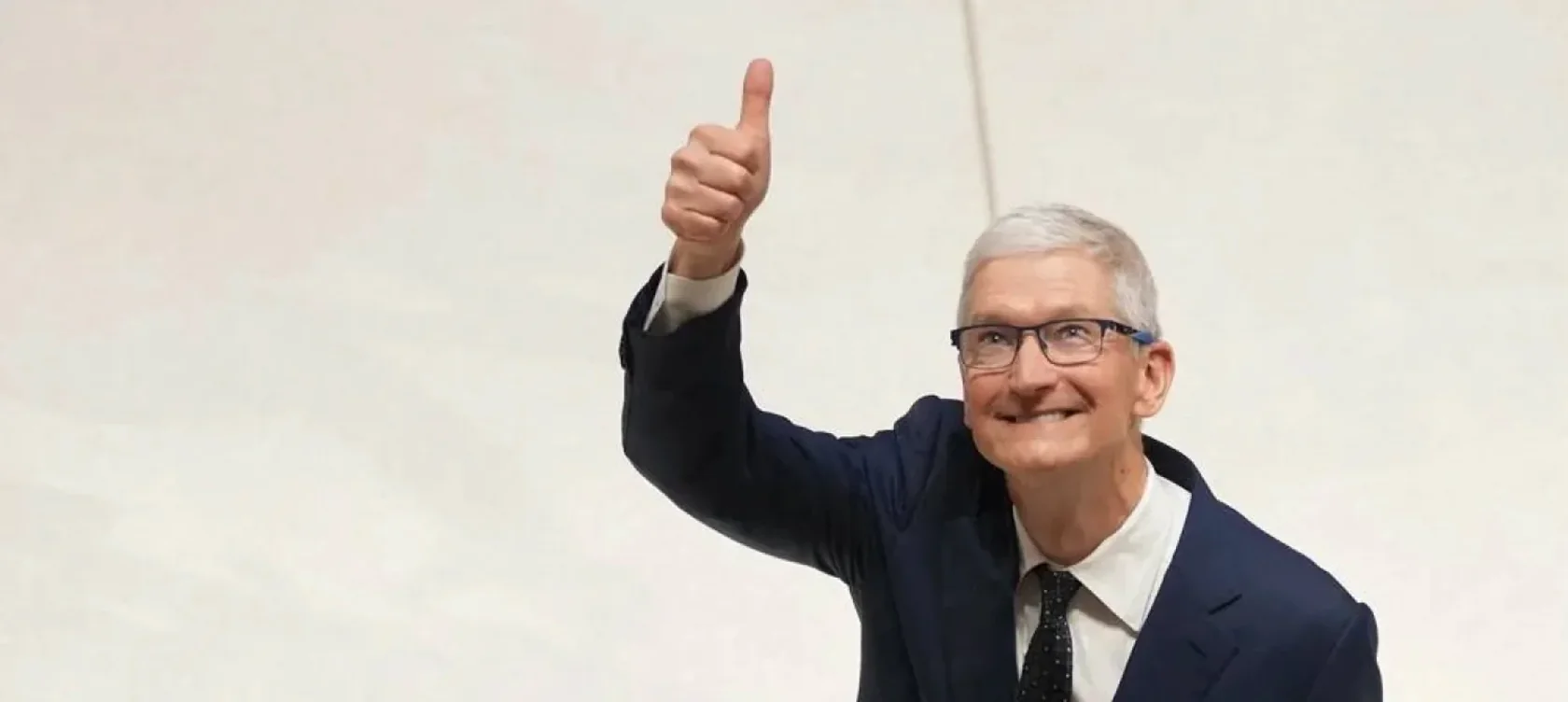
I think Apple is going downhill on almost every front that matters to me: software quality, user interface design, usability, and accessibility. Their Human Interface Guidelines used to feel close to sacred. They meant something. Instead, we now have Liquid Glass.
But let’s ignore all of that. I want to talk about Apple’s loss of morals and principles. All the other problems would be a lot easier to ignore were it not for the fact that, under Tim Cook’s leadership, Apple is becoming evil - or at the very least complicit in it.
Tim Cook’s Trump problem
Tim Cook has always been known for his ability to navigate political relationships, but what we’re seeing now goes far beyond pragmatic diplomacy. This is sycophancy, pure and simple.
It started with a $1 million personal donation to Trump’s inauguration fund, followed by Cook attending the inauguration itself. Then came the dinners at Mar-a-Lago. Then the golden statue: a “unique” piece of Corning glass with a 24-karat gold base, the Apple logo cut into it, Trump’s name printed on top. A literal golden idol, a thinly disguised bribe for a transactional president.
At White House dinners, Cook gushes: “It’s incredible to be among everyone here, particularly you and the First Lady. I’ve always enjoyed having dinner and interacting.” He thanks Trump for “setting the tone such that we could make a major investment in the United States”, and praises his “focus and leadership.” Reading this is nauseating.
Cook also attended a White House dinner honoring Mohammed bin Salman, the Saudi Crown Prince widely believed to have ordered the murder of journalist Jamal Khashoggi. So much for Apple’s supposed commitment to human rights.
This is the same Tim Cook who, in 2014, told climate change skeptics to get out of Apple stock if they didn’t like his values-driven decisions. “If you want me to do things only for ROI reasons, you should get out of this stock”, he said. That Tim Cook seems long gone.
Just days after federal agents shot and killed Alex Pretti in Minneapolis, Cook’s response was a private internal memo that didn’t even name the victim. A far cry from 2020, when he published a public statement on Apple’s homepage naming George Floyd directly. And while Minneapolis chaos unfolded, Cook attended a VIP screening of Amazon’s Melania documentary at the White House. He posed for photos with Brett Ratner, the film’s director, who faced multiple allegations of sexual assault and harassment and has ties to Epstein. Warner Bros. cut ties with Ratner over these allegations. But Cook? He smiled for the camera. Captured in his own prison, because he is unable to say no.
As tech journalist Om Malik recently observed: “This is what happens when valuations trump values.”
Selective enforcement of values
Apple loves to position itself as a champion of privacy and user safety. “Privacy is a human right”, Cook has said many times. But their actions tell a different story.
When the Trump administration demanded Apple remove ICEBlock from the App Store (an app for reporting ICE sightings, with over 1.1 million users), Apple complied immediately. Attorney General Pam Bondi claimed the app was “designed to put ICE agents at risk”. The app’s developer denied this, noting that Apple had received no evidence the app was used to harm anyone.
This is the company that in 2016 told the FBI “no” when they demanded Apple unlock the San Bernardino shooter’s iPhone. Back then, Apple stood on principle. Now? Immediate compliance. As Wiley Hodges, a 22-year Apple veteran, wrote in an open letter to Cook: “When you give a bully your lunch money, they always come back for more.”
Caving to government pressure isn’t new for Apple. In 2019, they removed HKMap, an app used by Hong Kong protesters to track police movements, after pressure from Chinese authorities. Back then, lawmakers from both parties criticized Apple’s censorship. Now the Trump administration is using the same playbook, and Apple is complying just as readily.
Meanwhile, X remains in the App Store despite Grok generating deepfake pornographic images of women and children. This clearly violates Apple’s own App Store guidelines: “Apps should not include content that is offensive, insensitive, upsetting, intended to disgust, in exceptionally poor taste, or just plain creepy.”
Remember when Tumblr got removed from the App Store over similar content? But X, owned by Musk, who sits next to Trump at dinners, stays. The Verge’s Elizabeth Lopatto put it bluntly: Tim Cook and Sundar Pichai are cowards. “They sold their principles for power, and now they don’t even control their own companies.”
The greed continues
Apple’s moral failings extend beyond politics to their core business practices. The pattern is always the same: they need to be forced by courts or regulators to do the right thing, and when they are, their compliance is malicious.
Look at their response to the EU’s Digital Markets Act. They were forced to allow third-party app stores and alternative browser engines. Instead of embracing a more open future, they implemented these requirements in ways so convoluted and punitive that they’re clearly designed to scare developers away. Third-party app stores face such hostile terms that almost no one uses them. Alternative browser engines are technically allowed, but Apple made the process so incredibly painful that not even Google has released Chrome with their own engine.
The Epic Games case is another perfect example. A 2021 court order required Apple to let developers link to external payment options. Apple’s response? They willingly failed to comply, according to the judge. They added a prohibitive 27% fee for external payments, restricted links to plain text (no buttons allowed), and showed users scary fullscreen warnings when they tapped an external link. The appeals court found that “Apple claimed to comply with the injunction, but it instead prohibited developers from using buttons, links, and other calls to action without paying a prohibitive commission”.
Patreon is now facing the latest chapter of this playbook. Apple is forcing creators to switch to subscription billing by November 2026, ensuring Apple gets its 30% cut. This is the third policy reversal in 18 months. Patreon says it “strongly disagrees” with Apple’s decision, noting that “creators need consistency and clarity in order to build healthy, long-term businesses”.
And then there’s the Camo lawsuit: Reincubate built an app that turns your phone into a webcam. It launched in 2020 and was used by “thousands of Apple employees”. Apple made “all sorts of promises” about how they could help. Two years later, Apple launched Continuity Camera, a near-identical feature, while simultaneously undermining Camo’s functionality. “We’d not come between Apple and users, we’d come between Apple and their walled garden”, said Reincubate’s CEO.
This is the “Sherlocking” that developers have feared for years, but combined with Apple’s platform control, it becomes something worse: build something successful on Apple’s platform, and they’ll not only copy it, but use their control over the OS to make sure you can’t compete with their copy.
Apple has me trapped
At this point, the most uncomfortable question isn’t about Apple. It’s about me. If I believe that Apple has lost its moral compass, then why am I still using Apple products? Why haven’t I switched?
The honest answer is simple: I am trapped in their walled garden.
I could switch from macOS to Linux. It would be painful (some apps I rely on don’t exist on Linux), but it’s theoretically possible. But what about my iPhone? Switch to Android? Google is no better than Apple. A de-Googled Android flavor like /e/OS? You can still install most Android apps, but it’s a compromised experience, and Android apps are generally worse than their iOS counterparts anyway. Plus there’s CarPlay, which works far better than my car’s built-in infotainment system. A de-Googled phone means no Android Auto either, which is close to a dealbreaker on its own.
More importantly, leaving Apple doesn’t mean switching a device. It means abandoning an ecosystem I’ve been slowly locked into for years. Photos. Notes. Contacts. Apple Music. Safari bookmarks and Reading List. iCloud Drive. Passwords and Passkeys. AirTags. And I absolutely refuse to swap iMessage for WhatsApp, because Meta is far worse than Apple.
And my iPad? I can’t run Linux on it, and Android tablets are still bad. I could keep the iPad, but at that point the whole promise of ecosystem convenience disappears.
The task of switching everything feels impossibly large. This is, of course, by design. Apple has spent decades building walls around their garden, making it progressively harder to leave.
Finding my way out
I’ve decided I won’t spend another cent on Apple hardware. My M1 MacBook, my iPhone 14 Pro, my 2018 iPad Pro: I’ll use them until they die or become unusable. Apple won’t earn another cent from me for hardware.
This is an imperfect solution. I’m still in the ecosystem, still contributing to their services revenue, still implicitly supporting a company whose values I no longer recognize. But it’s the compromise I’ve found between my principles and the practical reality of my digital life.
In 2026 I want to set up Nextcloud or ownCloud for me and my family, so that I start to move away from Apple’s ecosystem, bit by bit. I’ll probably add a self-hosted Bitwarden instance for password storage. Last year I already moved my smart home brains off of Apple’s Home app and onto Home Assistant. I suspect I’ll keep using Apple Music going forward: it works on Android (if I would switch to that), it has a web-based player that works on Linux, and my family all use it too (and we love to make collaborative playlists for road trips).
Final thoughts
I used to love Apple. I became a fan when they were the underdog, when they had something to prove, when the Human Interface Guidelines were treated as something approaching scripture. When “Think Different” actually meant something.
Now? Tim Cook gifts golden statues to authoritarians, poses with accused rapists, removes apps at the government’s request while letting Musk’s platform generate child abuse material, and extracts maximum rent from developers at every turn.
Tim Cook is destroying his legacy. But it’s not just his own legacy he’s burning - it’s Apple’s. He may think he’ll take his sins with him when he retires in a few years, but the damage he’s done to Apple will take far longer to heal.
I think of it this way: I would never buy a Tesla, because I don’t want to drive a car built by a fascist. Many people think like me. Apple is dangerously close to suffering the same fate.
The Apple I fell in love with is dead. What remains is a $3 trillion company that has traded its soul for stock price stability. I’m still in their garden - but at least now I’m looking for the gate.